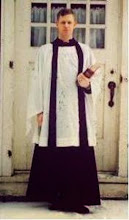
Strategic Alternatives for St. David's Church
June 21, 2010
Assuming no change in the present offerings and activities at St. David's', it will be defunct no later than 2014. From a business standpoint, therefore, the strategic alternatives open to the parish are threefold:
1. Liquidate
2. Merge
3. Downsize
No doubt liquidation would be painful for the remaining parishioners, but it is not a unique situation. Faced with an inability to pay clergy, staff, and services; going out of business is mandatory. According to the Dennis Canon, the property reverts to the Episcopal Diocese of Massachusetts, who would undoubtedly put it up for sale to any reputable buyer -- except a rival
Anglican Church. That is forbidden by The Episcopal Church.
Merger makes sense for two or more declining congregations, and is sanctioned by church authorities at both the national and diocesan levels. Recent mergers in New Bedford provide a precedent. Where the surviving parish would be housed is open to question. No doubt, struggles for supremacy would ensue, leaving bad feelings, and departure by persons devoted to the losing parish.
A remnant church could deliberately "downsize" by moving out of the quarters it can no longer afford, and seeking to rent an economical space in which to worship. Functioning without overhead expenses is the modus operandi for small Anglican churches. Part-time clergy suffice for conducting services; laymen perform all other ministries. It really works; I have participated in the early phases of a church plant in Brewster.
Instead of letting decline take its toll; there are ways in which a church can renew itself, grow, and achieve solvency. The objective is establish a unique identity, and thus to secure a competitive advantage. It does work.
I have seen the astounding growth of Brewster Baptist Church take place. I have also seen First Parish of Brewster (Universalist-Unitarian) find a commanding position -- and then lose it. In general terms, the alternatives are:
4. Advertise the internal strengths of the church.
5. Remove distracting and non-missional activities.
6. Organize an ancillary activity that attracts new church members.
7. Pursue a media-worthy community service.
8. Adopt a significant and newsworthy theological position.
and some combination of the above. But you cannot do all of them.
Churches do not advertise their internal strengths because they don't know what they are. I ran a 40 question census at Brewster Baptist, answered by over 400 parishioners, and found that its growth was due to one, and only one significant factor, to wit, the superb preaching by the senior pastor.
That was not news to anyone, but it disturbed the senior pastor no end.
If an activity sponsored by the church or conducted on its premises does not lead directly to attracting new members, then it should be discontinued. Goodwill in the community does not pay the bills. At St. David's, that means ending the community suppers, AA meetings, and the nursery school. However, organizing and conducting an ancillary activity that benefits people to the point that it draws them to join the church is what we want.
Pursuing a media-worthy community service may do that, with reservation. For example, dinners for the homeless are certainly Christian outreach, but they do not add parishioners, with rare exceptions. Try something with a more direct connection. Both Willow Creek and Saddleback do not depend on their Sunday worship services to attract and keep members. They provide a variety of helpful activities. A small church, like St. David's, has to focus and be known for doing something special that leads to Christian living. Brewster Baptist tries to do too many things, and not all of them well.
Differentiating one's church by adopting a significant theological position, and being known for it, is the province of many Episcopal churches in Manhattan. I recall St. Mary the Virgin, the original "diverse" congregation, St. Stephen's, the theater church, and of course, The Church of the Transfiguration, which everyone knows as "The Little Church Around the Corner." We liked St. Thomas Church on Fifth Avenue for its high, holy, sung services.
My personal preference is for continuing education. Willow Creek conducted a survey of its members, and found they wanted more explanation of their faith. Tim Keller of Redeemer Presbyterian Church in Manhattan does just that. A combination of evening programs at the church with follow-on home groups draws people and keeps them coming back. St. David now has only two little groups of old ladies talking to one another at the church.
About Me
Monday, September 8, 2014


Planning the Future of St. David's
Planning the Future of St. David's
May 16, 2010
Directory Listings: 2002 - 354, 2006 - 349, 2010 - 226.
Looks like the bottom dropped out!
Partially explained by 33 deaths/funerals/burials in 2009.
Average Sunday Attendance: 40-50 at 8, 80-90 at 10 (ushers' counts),
Including everyone but school age children.
Pledging Units: 130 to 140 at last report.
A fact never discussed at St. David's
Is the meltdown that the parent denomination is suffering.
Whilst arguments are constantly made about the merits of its actions,
The results have been an accelerating decline in membership,
By abandonment and separation.
St. David's is not insulated from a perfect storm of negative factors:
(1). Nationwide disinterest in attending church services,
(2). Oversupply of churches on Cape Cod,
(3). Aging demographics of the local population,
(4). Visible contention of theological views by competing Anglican churches.
Ignoring these conditions means losing control over the future of St. David's.
The existential question is: "Is St. David's worth saving?"
If St. David's continues on its present course, It will be defunct by 2014.
The Diocese of Massachusetts has no interest in shoring up a dying parish.
Bishop Shaw extolled the combination of four parishes in New Bedford.
Growth, even survival of St. David's depends on
Dramatic differentiation of what we do from other churches;
Perhaps even a new identification of service that can attract
People to join us in its accomplishment.
Budget Crisis at St. David's
Budget Crisis at St. David's
January 6, 2009
The intent of these entries is not to derogate the good people
And their efforts at St. David's Episcopal Church.
As previously reported, the survival of the parish
Is severely handicapped by the environment in which it functions.
Now, again, a budget crisis looms,
Despite a recent every member canvass,
The pledged amount for 2010 falls critically
Short of a proposed budget.
The budget itself is patently inadequate.
The new rector agreed to a truncated contract.
Compensation of the paid staff is unconscionable;
Outreach and improvements depend on dedicated funds.
Week by week the Sunday attendance falls.
Old folks go to their heavenly reward
And are not replaced by contributing newcomers.
Fewer hands are able to work in vital functions.
Again, the old feasible solutions are liquidation
Of perhaps merger with a more affluent parish.
It won't happen, the mindset of those in charge
Is simply to ride to gradual extinction.
A Perfect Storm
A Perfect Storm
May 12, 2009
St. David's Episcopal Church in South Yarmouth, MA, faces a perfect storm
in the prospects for its future as an ongoing congregation. First, the demographics
of the population on Cape Cod are increasingly skewed toward aging citizens.
As a consequence, the potential pool of members is decreased at the younger
age range, from whence continuity as well as innovation could be expected.
Second, the Cape is considerably over-churched, with many small congregations
at a survival level of one hundred or less active members. Third, the turmoil
in the national church militates against the attractiveness of local parishes. Who
wants to join a church whose members are at war, publicly, with one another?
Last, the current economic downturn has reduced the pool of funds from which
long time members draw upon to contribute to their church.
The vestry of St. David's has now decided to seek a part-time rector, because
they cannot pay the going rate for a full-time priest. This plan has its own
special difficulties, but it is not necessarily a bad outcome. If greater
involvement by the laity in clerical functions results, the church may be better
off. That is essentially what was recommended in the previous post.
Survival Plan for St. David's
Survival Plan for St. David's
February 27, 2009
1. Agree that withdrawal of funds from the Diocesan Investment trust is folly at this time.
2. Examine the trend of pledges and plate income for the past five years to ascertain prospects for improvement.
3. St. David's IS 100% outreach in that we provide a splendid venue for worship, and a caring community of believers.
4. Declare a moratorium on donations of funds to outside agencies, including the Diocesan assessment. Theoretically, the Diocese could declare us "out of communion," and employ the Dennis Canon to seize the property. Practically, that would be bad for all parties concerned.
5. Upon termination of our contract with the co-interim co-rectors, function without appointed clergy. Employ supply priests or possibly a nominal "priest-in-charge" who only conducts services.
6. Explore opportunities for regional cooperation on Cape Cod among Episcopal parishes to accomplish administrative economies.
7. Raise up lay ministers to the level of part-time clergy who visit the hospitals and the housebound, conduct morning and evening prayer services, and lead religious study.
8. Organize a vigorous evangelism campaign to attract new members based on a dramatic differentiation from neighboring churches.
9. Terminate the day school, and other secular uses of our facilities to save expenses.
10. Hire a full time manager to oversee all the office and building activities, including the supervision of out-sourced functions.
Crisis at St. David's
Crisis at St. David's
February 8, 2009
In the company of my wife, Barbara Rockefeller, I have been attending St. David's Episcopal Church in S. Yarmouth, MA. Barbara is on the vestry, so I have been well supplied with information on the status of the church.We attended the annual convention of the Episcopal Diocese of Massachusetts, held in Hyannis.
The long-time rector of St. David's retired in September. A married couple serve as interim pastors. The average Sunday attendance in February is about seventy adult worshippers at the 10 a.m. service. Funerals are frequent, baptisms are few, new members are rare. The median age of adults looks to be about seventy.
At the annual parish meeting, the senior warden announced that the number of pledging units was reduced by 35 from last year. Some are deferring a pledge because of uncertainty about their financial situation. We are all living on social security, pensions, and distributions from investments.
In short, St. David's Episcopal Church is no longer a going concern. The search committee has been estopped from receiving names for a new rector, because the church cannot afford to pay a full time person. The search consultant has recommended that we consider a part-time priest.
In informal conversations with various powers that be, I have identified our choices as liquidation, merger, or separation from the Diocese of Massachusetts. Four Episcopal churches in New Bedford combined into one last year. Other Episcopal churches on Cape Cod are in a predicament similar to St. David's, and thus might be amenable to merger. Three larger Episcopal churches on Cape Cod, blessed with affluent and supportive congregations, may be surviving.
Disassociation from The Episcopal Church is unthinkable to the present members of St. David's Church. They are uniformly supportive of all the radical actions of TEC, revere the presiding bishop as a messiah, and have canonized Bishop Robinson as a contemporary saint.
I don't have any problem worshipping at St. David's; my theology remains unshaken. And the people are wonderfully welcoming. I have volunteered to lead a course in "How to Read and Understand the Bible," drawing on my experiences at Brewster Baptist Church.
Wednesday, July 9, 2014
Block Island
Block Island is a speck between Rhode Island and Long Island, NY,
about half the size of Nantucket, with cliffs, beaches. harbors, an
airport, numerous lodgings, and a little more than a thousand inhabitants
year round, swelling to ten to fifteen thousand in the summer.


We spent a few days there as guests of B's brother and wife to celebrate
F's birthday. He is 83, nearly two years younger than B. We stayed
at a so-called luxury hotel with the two other old folks, while F sailed
from Newport in a large rented boat. His son skippered, accompanied
by six or seven others in the family. We stayed on land, even though
the weather was perfect.
S. and I had been to Block Island about fifteen years ago, on a day trip
with one of Cape Cod's tour groups. I remembered it as quaint and
charming. A local guide had bussed us around the sights for an hour or so.
We had lunch at a delighful sit-down restaurant just steps from the
ferry. There was one lone cab waiting across the street then.
That memory was erased immediately, when I saw the fast food
joint and picnic tables in the picket fence enclosure that had surrounded
the former establishment. Clearly the replacement was shoveling food
to the great unwashed as they came off the ferry. Block Island, and
its row of shlocky shops, had slid down the scale to the lowest
common denominator.
This trip led us to take a cab, among many, up the hill to the hotel,
where an adventure began that would take too long to document,
Suffice to say that we rated the experience, "poor," on the survey
card and detailed everything wrong . . . which was a lot. We left a
a day early, and had to roll the luggage down the hill to the ferry.
The family reunion was fine, in itself, but sort of helter-skelter, with
people getting on and off the boat. We only saw it from a distance.
Block Island sees lots of beachgoers, bicyclists, and rented mopeds.
They seemed to enjoy themselves on the island. But it doesn't
compare to Cape Cod and the Islands.
about half the size of Nantucket, with cliffs, beaches. harbors, an
airport, numerous lodgings, and a little more than a thousand inhabitants
year round, swelling to ten to fifteen thousand in the summer.
We spent a few days there as guests of B's brother and wife to celebrate
F's birthday. He is 83, nearly two years younger than B. We stayed
at a so-called luxury hotel with the two other old folks, while F sailed
from Newport in a large rented boat. His son skippered, accompanied
by six or seven others in the family. We stayed on land, even though
the weather was perfect.
S. and I had been to Block Island about fifteen years ago, on a day trip
with one of Cape Cod's tour groups. I remembered it as quaint and
charming. A local guide had bussed us around the sights for an hour or so.
We had lunch at a delighful sit-down restaurant just steps from the
ferry. There was one lone cab waiting across the street then.
That memory was erased immediately, when I saw the fast food
joint and picnic tables in the picket fence enclosure that had surrounded
the former establishment. Clearly the replacement was shoveling food
to the great unwashed as they came off the ferry. Block Island, and
its row of shlocky shops, had slid down the scale to the lowest
common denominator.
This trip led us to take a cab, among many, up the hill to the hotel,
where an adventure began that would take too long to document,
Suffice to say that we rated the experience, "poor," on the survey
card and detailed everything wrong . . . which was a lot. We left a
a day early, and had to roll the luggage down the hill to the ferry.
The family reunion was fine, in itself, but sort of helter-skelter, with
people getting on and off the boat. We only saw it from a distance.
Block Island sees lots of beachgoers, bicyclists, and rented mopeds.
They seemed to enjoy themselves on the island. But it doesn't
compare to Cape Cod and the Islands.
Subscribe to:
Posts (Atom)