About Me

My photo
Yarmouth Port, Massachusetts, United States

Monday, March 8, 2010

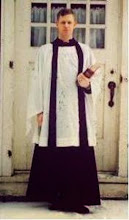
The Skipper

Charles Henry Kimball

Norman graduated from Cornell University,
But his younger brother, Charles, spent only
Two years at the University of Wisconsin,
Ostensibly studying forestry.

He joined the Phi Delta Theta fraternity
And had a wonderful time, sailing and partying.
His father told him to get a job
After his second year.

The Skipper worked for the Old Ben Coal Company
For forty-six years, or so I thought.
My brother, Charles, said that he and another
Salesman started the Eastern Star Coal Company.

That was either bought out by Old Ben,
Or didn't last long; he never mentioned it.
He knew the owners of Old Ben from age twenty,
Probably from sailing DeWitt Buchanan's A boat.

That was his passion in his younger days:
Sailing class boats on Lake Winnebago.
An old-timer described him as Skipper Kimball,
And that became his nickname for us forever.

Aunt Day, DeWitt's aunt, took care of him at their
Summer home in Oconomowoc, Wisconsin,
When he developed rheumatic fever,
That began lifelong heart problems.

Sue and I visited the Buchanans there
Before we were married, staying at the local
Hotel where "After the Ball is Over" was written.
And seeing "The Chocolate Soldier" with Aunt Day.

The Skipper loved show business; while on the road,
He always took in the local vaudeville.
He had met or seen all the popular entertainers
Who later became radio and movie stars.

He was a crack bridge player;
Could easily have been a life master.
But he didn't like tournaments, and preferred
To play for low stakes at his club.

Mom and Dad moved to Clearwater Beach, Florida,
From Eau Claire, Wisconsin, for a few years.
Charles and I visited them there for his
Seventieth birthday, and he died that year.

Sunday, March 7, 2010

Oshkosh

Caroline Howe Kimball

When this picture was taken
Carrie looked rather more formidable
Than she was reputed to be, but then
She had a position to maintain in Oshkosh.

The town fathers recognized that Carrie
Had quite a refined education;
Much more than the rough-hewn pioneers
Of a frontier town in Wisconsin.

So they asked her to start a high school;
She hired and in some cases trained the teachers.
The doors opened in 1869, and is now known
As Oshkosh West High School.

Tante

Lillian Kimball Stewart graduated at nineteen
From Vassar College in Poughkeepsie, New York.
She taught English at her mother's school, then
At the normal school, now the U. of Wisconsin in Oshkosh.

She was always referred to by her nephews as "Tante."
Norman and Charles were close to her personally.
Tante wed old Frank Stewart late in life;
Immensely pleased to be a married woman.


Ma and Pa Kimball

Charles William Kimball didn't like his name,
So he rearranged it to William C. Kimball.
Became a court reporter when that post was
Much more than stenography.

He read for the law and was admitted to the
Bar of Winnebago County in 1888.
My son, Steven the lawyer, has the certificate
Hanging in his office in Sacramento.

Among the personal memories of my father
Was the sight of Winnebago Indians sleeping
Next to the furnace of their home in Oshkosh.
William C. was their agent to the government.

His wife, Katharine Kitz, came from a German family.
My uncle, Norman, remembered that the uncles spoke German.
The name must be a shortening of a longer Deutsche Namen,
Following the introductory, "Kitz."

My father never spoke of his mother.
I gather she was a strict disciplinarian.
He did say that she died in his arms in 1911,
When he was only twenty-one.

Mantheno Crosby Kimball moved to Grand Rapids, Michigan.
Dying young in 1895; he was a "railroad man."
His line continues in the Grand Rapids area,
From a son named Richard, the most common Kimball name.

Friday, March 5, 2010

On Wisconsin

After six generations, we now enter the land of living memory.
Mary Moore, wife of Nehemiah Dean Kimball
Was born in 1795 in Maine, and died in Wisconsin in 1887.
Tante (Lillian Kimball Stewart) talked about her to me in 1943.

Mary was the pipe-smoking grandmother, and a trial to all.
Mary and Dean had eight children, one of whom died at age five
From scalding when she fell into a tub of boiling water.
Both Tante and my father related this tragic accident to me.

Dean Kimball was a cooper, lumberjack, sawyer and farmer.
He served in 1814 in the local militia
Which drove off a British landing party at Topsham.
Firing solid shot from a six-pounder, mounted on the bluff.

Lumbering was Dean's game, as well as for his sons.
When their leases ran out in Maine in 1849,
The entire family, save Sophia, moved to Neenah, Wisconsin
To take up lumbering in lands confiscated from the Indians.


Their third child, and second son, was Charles Dean Kimball.
Charles had little formal education but developed great woods sense
In the forests around his home in Skowhegan, Maine.
He and a Penobscot friend would spend days camped in the forest.

Other families moved from Maine to Wisconsin as
The railroad and the steamship made travel a matter of days.
Charles met Caroline Howe in Maine
And saw her again on her visit to relatives in Wisconsin.

When they married in 1857, Caroline had completed her studies
At Hampden Academy, comparable to a community college today.
When they traveled to Superior, Wisconsin, they bought items
Still in possession of the Kimball family today.

Charles was the "Pioneer of Old Superior" in a book
Written by his daughter, Lillian, and privately printed.
He had become a prospecting geologist, as well as
A surveyor and builder of roads in the new city of Superior.

Three children arrived in quick succession:
Charles William, Lillian Gertrude, and Mantheno.
Devastation struck when Charles drowned on a prospecting trip,
Leaving Carrie no choice but to move in with relatives in Oshkosh.

Farming and Living

Our next two generations of Kimballs in North America
Led quiet and unassuming lives.
Only the usual records indicate their births, deaths,
Marriages and children.

Richard, the son of Richard the Emigrant,
Must have received a land grant in Wenham
Just down the road a piece from Ipswich
Where he lived and died, as wheelwright and farmer.

He married Mary Cooley, of parts unknown;
Their youngest child was Caleb, also of Wenham.
Caleb is described as mason and farmer, wife of Sarah Safford
Who both lived and died in Wenham.

Interestingly, a New Hampshire connection arises
As Caleb left land in Exeter to his three sons.
Exeter, New Hampshire, would have been
A two day drive from Wenham in those days.

We do know that his son John settled in Exeter
John Kimball was a ship carpenter and farmer
Who served under Captain Folsom of Exeter.
In capturing a French fort on Lake Champlain in 1755.

John lived to be eighty-five, a rarity for the times.
His son Joseph, also a carpenter and farmer
Married three times, siring ten children.
In 1778, he served briefly in a New Hampshire regiment.

Joseph's first wife was Mary Sanborn.
The poor girl had only one child, then died at age 23.
She was lost to the genealogical record until traced
Through the Sanborn family to Peter Sanborn Kimball.

This feckless fellow could not cope with the death of his wife
In Brunswick, Maine, while on the road to Lisbon.
He left his five small children with strangers in Brunswick
And apparently never provided for them again.

Peter Sanborn Kimball is described as a cooper and farmer.
At seventeen, he fought in the climactic battle of Saratoga in 1777.
He and his wife, Abigail Dean, were first cousins.
Sharing John and Abigail Lyford Kimball as grandparents.

Thursday, March 4, 2010

Settling In

The families first settled in Watertown, near Boston.
They had to live in hovels built by the earliest settlers
Who had since moved up to more spacious quarters.
So they kept looking for suitable land for permanent homes.

Richard and his companions were soon engaged in building houses.
Both Richard and his son, Richard, were wheelwrights
Which meant that they knew something of carpentry
And the use of simple mathematics in construction.

They are said to have built, or helped to build
Two elegant homes that are still standing:
The house at Cogwell's Grant in Essex, and
The Whipple House in Ipswich.

Both belie the notion that Puritan tastes were primitive.
Perhaps it was their work on the latter that led to an
Invitation to practice their wheelwright trade in the town of Ipswich,
And the grant of two home sites in town, plus a forty acre farm nearby.

Richard spent the rest of his life in Ipswich,
Practicing his trade and participating in town business.
After Ursula died, he married Margaret Dow.
In his will, and other records, he signed his name, "Richard Kimball."

This is odd, because that spelling of the name does not appear
In England, nor was it used by Henry or anyone else in the colonies.
Records of the ancestral line starts with one Thomas Kembold
Who was born in 1396 and lived in Hitcham, Suffolk.

The name literally means: "The bold Welshman,"
Being a combination of "bold" and "Cym" for Wales.
Perhaps the first Kembold did some noble deed in battle,
Resulting in a coat of arms, now generally regarded as spurious.

Richard's brother, Henry, preferred Kemball.
His slender line gradually changed it to Kimbell.
That name may also have been changed from Kimball
By Southerners during the Civil War, to emphasize their secession.

There is no doubt, however, that anyone with the name "Kimball"
Is directly descended from Richard the Emigrant.
Therefore we are all cousins of a sort
Greeting each other as such whenever we meet.

Wednesday, March 3, 2010

An Immigrant

The families talked about leaving for a year or more.
They were unhappy with their life in the mother country
For a number or reasons, and saw a deliverance
From the stifling requirements of life at home.

The king's rule was absolute, and his actions
Were sometimes arbitrary and capricious.
Whether or not you were religious,
You had to belong to the prescribed church.

A rebellion was brewing from the dissidents
Which later led to civil war and death of the king.
Some of the malcontents left in a small ship
Years before to settle in a savage, unknown land.

You could become a free man in the king's realm,
But you could not rise above your station in life.
The trade or occupation you followed
Was simply passed down from father to son.

The families did not own their homes,
Being perpetual tenants on land that
The old king seized from the church and
Gave to his supporters a century before.

It was the promise of land that did it.
Some developers came back from the new country
And recruited new settlers with the promise
Of owning land for homes and farms.

Richard was reluctant, his wife Ursula even more so.
It was her brother Tom that championed the move.
What do do with their widowed mother was
Solved by Martha's decision to go with them.

So they signed on to a voyage on the Elizabeth,
Left their home in Rattlesden, Suffolk, England,
To sail to Boston in 1634, with their five children,
Tom Scott, Richard's brother Henry, and their families.

Wednesday, February 3, 2010

An Old Folks' Guide to Solvency

No one can successfully predict the future.
There are too many variables in the financial picture
To be resolved in easy steps.
For the older investor, long term is short term.

The big boys down at the pool room
Have time-honored rules that are generally helpful.
"Hold your gains; sell your losses."
"Don't sell into a panic."

"Don't double down your losing investment."
"Don't try to time the market."
"Maintain a diversified portfolio."
"Rebalance periodically."

The sophisticated investor violates all those rules.
He/she reads Section C of the Wall Street Journal,
Absorbs all the conflicting news,
Plots trends in his/her head, and acts on gut feel.

Both the dotcom bubble and the housing bubble
Were foreseen months ahead and duly reported.
Anyone who paid attention to the financial news
Could avoid being trapped by either.

Current financial dangers are a run on the dollar
Together with galloping inflation.
Both threaten the value of our fixed investments.
But there is not much we can do about it as investors.

Don't buy gold or some other nutty dodge.
Have faith that the ship of state will right itself.
Congress is too scared to pursue bold steps now;
We are always better off when Congress does nothing.

If you have sufficient means for long-term care
And something more; spend it while you can
And enjoy life as much as possible.
That's what my children tell me.